
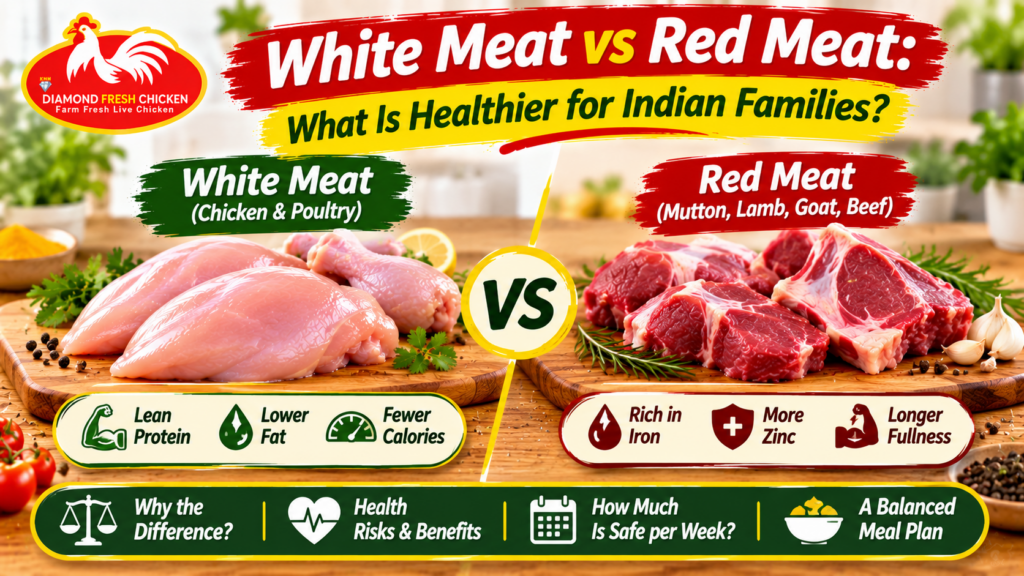
Doctors, trainers and family elders all have an opinion on meat, and the advice often sounds like a choice between white and red. Chicken is called the safe option, while mutton is seen as rich and heavy.
The truth is more useful than that simple split. For a closer look at chicken alone, read our guide on whether chicken is good for health.
This post explains white meat vs red meat in plain terms: what each one is, how they compare on nutrition, what health bodies say, and how to balance both in your week.
Table of Contents
ToggleAt A Glance
White meat mainly means poultry such as chicken and turkey.
Red meat means meat from mammals, including mutton, lamb, goat, beef and pork.
White meat is usually leaner and lower in saturated fat.
Red meat carries more iron, zinc and vitamin B12.
WHO classifies red meat as probably cancer-causing when eaten in large amounts, and processed meat as cancer-causing.
Most families do well with mostly white meat, plus red meat once or twice a week.
What Is The Difference Between White And Red Meat?
The difference between white and red meat comes down to a protein called myoglobin, which stores oxygen in muscle. Red meat comes from mammals and has more myoglobin, giving it a darker colour and more iron. White meat, mainly poultry, has less myoglobin and a paler colour.
Here is how the common meats in Indian kitchens are grouped:
White meat: chicken, turkey and other poultry.
Red meat: mutton, goat, lamb, beef, veal and pork.
Fish and seafood: usually treated as a separate group, closer to white meat in health advice.
Processed meat: sausages, salami, ham, bacon and similar products, whether made from red meat or poultry.
The World Health Organization uses the same definition and lists beef, veal, pork, lamb, mutton, horse and goat as red meat.
Colour alone can mislead, though. Chicken thighs look darker than breast because the leg muscle works harder, yet thigh is still poultry. Our guide to the types of chicken cuts explains how each cut differs in fat and texture.
Is Chicken Red Or White Meat?
Chicken is white meat. All poultry counts as white meat in nutrition and health guidance, including darker cuts like thighs and drumsticks. Those cuts are sometimes called dark meat, but that only describes their colour, not a move into the red meat group.
So when people ask, “is chicken red or white meat?”, the short answer is white. A few points clear up the usual confusion:
Breast is the palest, leanest part of the bird.
Thighs and drumsticks are darker poultry meat with a little more fat and iron.
Chicken liver is organ meat, dark in colour and very rich in iron, but still poultry.
Duck is poultry too, but it is fattier and darker than chicken.
In practice, the white meat vs red meat label matters less than the cut and the cooking. Fried chicken with skin can carry more fat than a lean mutton curry.
How Do White And Red Meat Compare On Nutrition?
Per 100 g cooked, skinless chicken breast gives about 31 g of protein and 3.6 g of fat. Lean roasted goat is similar at about 27 g of protein and 3 g of fat, while lamb is much fattier. Red meats are clearly richer in iron and zinc.
Here is a side-by-side view using USDA values for roasted meat:
| Per 100 g cooked | Chicken breast (skinless) | Lean goat | Lamb | Beef |
|---|---|---|---|---|
| Calories | 165 kcal | 143 kcal | about 258 kcal | about 187 kcal |
| Protein | 31 g | 27 g | about 25 g | about 26 g |
| Saturated fat | Low | Very low | High | Moderate |
| Iron | 1.0 mg | 3.7 mg | about 2 mg | about 2.6 mg |
| Zinc | about 1 mg | 5.3 mg | Higher | Higher |
A few things stand out in the white meat vs red meat numbers:
Protein is similar across all of them. You will not go short on protein with either.
Saturated fat varies most. Lamb and fatty cuts carry far more than chicken breast or lean goat.
Iron and zinc are where red meat clearly wins, which matters for women, teenagers and anyone with low iron.
Skin makes a big difference on the white meat side. Our post on skinless chicken benefits shows how much fat you save by removing it.
Is Red Meat Bad For Health?
Red meat is not bad in moderate amounts, but eating a lot of it is linked to a higher risk of bowel cancer and heart disease. Processed meat carries the strongest evidence of harm. Fresh white meat is generally the safer everyday choice.
Here is what the major health bodies say:
WHO and IARC: in 2015, the WHO’s cancer agency classified processed meat as cancer-causing and red meat as probably cancer-causing, based mainly on the link with colorectal cancer. The risk rises with the amount eaten.
ICMR-NIN (India): the 2024 Dietary Guidelines for Indians name red meat such as mutton, beef and pork as a hidden source of saturated fat and advise limiting it.
Heart health experts: generally recommend lean poultry, fish and plant proteins as everyday choices, with red meat in smaller portions.
This does not mean red meat must be avoided. It is a strong source of iron, zinc and vitamin B12. The point of the white meat vs red meat guidance is balance: lean, fresh meat, sensible portions, and processed meat kept to a minimum.
How Much Red Meat Per Week Is Safe?
Most health guidance suggests keeping red meat to about one or two meals a week, roughly 300 to 500 g of cooked red meat in total, and eating processed meat rarely. White meat, fish, eggs, dals and vegetables can cover the rest of your protein needs.
How much red meat per week suits you depends on your health and habits:
Healthy adults: one or two red meat meals a week, using lean cuts.
High cholesterol or heart disease: keep red meat occasional and ask your doctor about a safe amount.
Low iron: lean red meat once a week can help, alongside iron-rich vegetables and pulses.
Gout or high uric acid: red meat and organ meats are usually limited; follow your doctor’s advice.
Children: small portions of lean red meat add useful iron for growth.
Cooking method matters as well, and it can shift the white meat vs red meat picture more than people expect. A chicken leg fried in oil until crisp can end up less healthy than a lean mutton curry cooked slowly with little fat.
Charring meat over very high heat creates compounds linked to cancer, so slow cooking, pressure cooking and grilling without burning are better choices for both meats.
How Can You Balance White And Red Meat In Your Diet?
Make white meat your everyday protein and treat red meat as a weekly meal. This simple pattern keeps saturated fat low while still giving you the iron and zinc that red meat provides.
Think of white meat vs red meat as a ratio rather than a ban. Most nutrition experts are comfortable with both on the menu, as long as poultry, fish and plant proteins make up the larger share of your week.
A practical weekly pattern for Indian homes:
Three to four days: skinless chicken curry cut, boneless breast or chicken thighs.
One or two days: fish, eggs or a vegetarian protein such as dal or paneer.
One day: a lean red meat dish, such as goat curry with visible fat trimmed.
Rarely: processed meats like sausages, salami and ham.
Every day: plenty of vegetables, whole grains and pulses alongside the meat.
Portions keep both groups in check. Aim for around 100 to 150 g of cooked meat per adult per meal, and use our guide on how much chicken to buy per person when planning family meals or parties.
Frequently Asked Questions
Is chicken white meat or red meat?
Chicken is white meat. Even darker cuts like thighs and drumsticks count as poultry, not red meat.
Is mutton red meat?
Yes. Mutton, whether from goat or sheep, is red meat because it comes from a mammal and is rich in myoglobin.
Is white meat healthier than red meat?
Usually, yes. White meat tends to be leaner and lower in saturated fat, though lean red meat in moderation is also part of a healthy diet.
Is pork white meat or red meat?
Pork is classed as red meat by the WHO and most nutrition bodies, even though some cuts look pale when cooked.
Is fish white meat?
Fish is usually treated as its own group. Health advice places it alongside white meat as an everyday protein choice.
Which is better for weight loss, white meat or red meat?
White meat, especially skinless chicken breast, is better for weight loss because the white meat vs red meat gap in fat is widest there.
Ready To Make White Meat Your Everyday Protein?
Keep red meat for the occasional weekend meal and let lean, fresh chicken carry the rest of your week. Order skinless curry cut and boneless breast from Diamond Fresh Chicken and put the white meat vs red meat advice into practice.