
Chicken is one of the most common proteins on Indian dinner plates, but how healthy is it really? For most people the answer is yes, with a few rules about the cut, the cooking, and the freshness. You can find more explainers like this on our fresh chicken blog.
So is chicken good for health, or is it overhyped? Below you get USDA-based nutrition numbers, the real benefits, the risks worth knowing, and a simple way to buy and cook chicken for your family.
The Short Version
- Cooked skinless breast gives about 31g of protein per 100g.
- Chicken also supplies niacin, vitamin B6, selenium, and phosphorus.
- The risk sits in frying, processed products, and undercooked meat.
- A palm-sized portion most days suits most healthy adults.
What Do Chicken Nutrition Facts Look Like Per Serving?
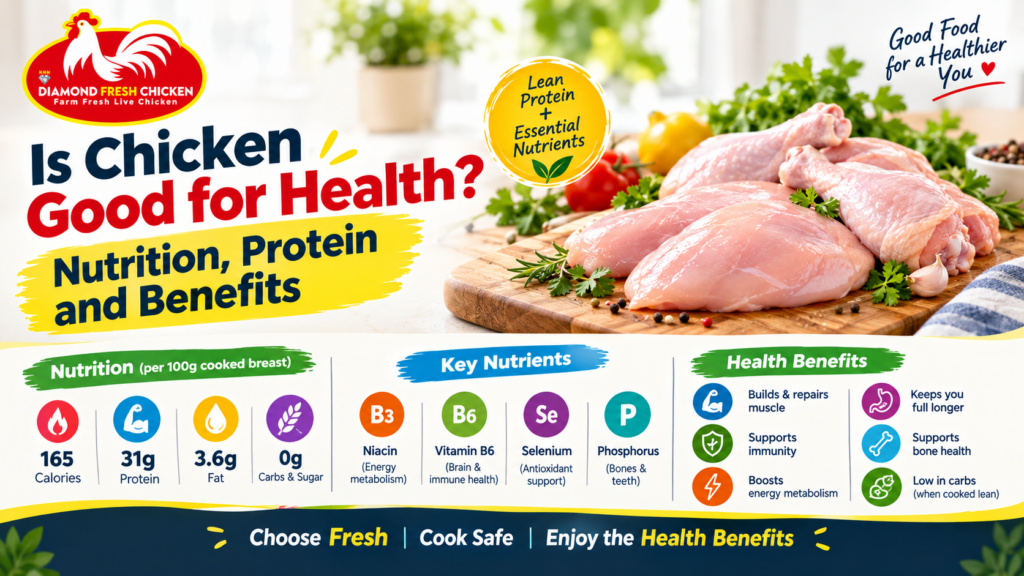
Is chicken good for health? The numbers say yes for lean cuts. USDA data shows 100g of roasted skinless chicken breast has about 165 calories, 31g of protein, and 3.6g of fat, with no carbohydrate and no sugar.
Dark meat and skin add fat, and fat adds calories. This table compares 100g of cooked chicken by cut.
| Cut | Calories | Protein | Best for |
| Breast, skinless | 165 | 31g | Weight loss and high protein meals |
| Drumstick, skinless | about 155 | about 24g | Everyday curries on a budget |
| Thigh, with skin | 225 | 23g | Flavour-rich dishes like tandoori |
Values are rounded from USDA reference data and shift slightly with the cooking method. Chicken nutrition facts also vary a little between farms and feed, so treat any single number as a close guide, not a guarantee.
How Much Protein Does A Serving Of Chicken Give?
Cooked skinless chicken breast gives about 31g of protein per 100g, and thigh with skin gives about 23g. Raw chicken shows a lower figure, roughly 22g per 100g, because cooking removes water and concentrates the protein.
Always check whether a chicken protein per 100g figure refers to raw or cooked weight. A 150g raw breast cooks down to roughly 110g, so weigh it the same way every time if you track macros.
Here is what common portions deliver once cooked:
- Small piece (75g): about 23g of protein from breast, a light snack or salad topper.
- Palm-sized portion (100g): about 31g of protein from breast, the usual single serving.
- Large portion (150g): about 46g of protein from breast, enough for a post-workout meal.
For context, the standard adult guideline is about 0.8g of protein per kg of body weight. A 65kg adult needs roughly 52g a day, and one 150g cooked breast covers most of that.
If you buy by the kilo, our fresh chicken cuts make portioning easy, because you can order the exact cut and quantity you need.
What Are The Health Benefits Of Chicken?
The health benefits of chicken come from lean, complete protein plus B vitamins and minerals. It supports muscle repair, keeps you full for longer, and supplies niacin, vitamin B6, selenium, and phosphorus without adding carbohydrate.
- Muscle repair: chicken is a complete protein with all nine essential amino acids, which helps you maintain and rebuild muscle, especially alongside strength training.
- Fullness: protein slows hunger, so lean chicken fits well into weight loss plans.
- Energy metabolism: 100g of roasted breast gives about 86% of the daily value for niacin and 35% for vitamin B6.
- Mineral support: the same portion gives about 50% of daily selenium and 18% of phosphorus, which support thyroid function and bones.
- Low carbohydrate: chicken suits low carbohydrate and diabetes-friendly meal plans when cooked without sugary marinades.
Variety within chicken also helps. Breast is lean and high in protein, while thigh and drumstick bring more iron and zinc, which is useful for children and active adults. Chicken liver is richer still in iron and vitamin A, though it should be an occasional food.
Is chicken good for health when you compare it with other meats? It holds its own. The USDA vitamin B6 food list includes several chicken cuts alongside turkey, pork, and fish as sources of that vitamin.
Can Eating Chicken Be Bad For You?
Chicken becomes a problem through how it is prepared, not what it is. Deep frying, heavy batter, processed nuggets, and undercooked meat carry the risks, while fresh, lean, thoroughly cooked chicken stays a sound everyday protein.
Is chicken good for health when it is fried in reused oil every day? Not really. Watch for these four issues:
- Frying and batter: these add saturated fat and a large number of extra calories.
- Processed products: nuggets, sausages, and cold cuts often carry more sodium and preservatives.
- Undercooked meat: raw or pink chicken can carry Salmonella and Campylobacter, so cook it to an internal temperature of 74°C.
- Cholesterol: 100g of roasted breast holds about 85mg, so people with high cholesterol should ask a doctor about portions.
Handling matters as much as cooking. You can learn who we are and how we work on our about page.
Is It Safe To Eat Chicken Every Day?
For most healthy adults, a palm-sized portion of 100g to 150g of cooked chicken a day is safe within a varied diet. Rotate cuts, cook it simply, and add dal, eggs, curd, vegetables, and fish across the week.
Is chicken good for health as a daily habit? It can be, as long as variety and cooking method stay in check. The method changes the result more than the cut does.
| Cooking method | Health rating | Notes |
| Steamed or boiled | Excellent | No added fat |
| Grilled or air fried | Very good | Avoid heavy charring |
| Curry with little oil | Good | Watch oil and salt |
| Deep fried | Limit | Adds fat and calories fast |
A practical weekly pattern looks like this: chicken on three or four days, fish or eggs on two days, and dal or paneer on the rest. That keeps protein high while spreading out fat types and micronutrients.
People with kidney disease, gout, or high cholesterol should check portion sizes with a doctor before eating chicken daily.
Does Fresh Chicken Make A Difference To Nutrition?
The protein and mineral content of fresh and frozen chicken is similar. Freshness changes taste, texture, and safety margin: chicken cooked soon after purchase tends to stay juicier and avoids the extra liquid loss that comes with thawing.
Another practical point is portion control. Fresh chicken cut to order lets you buy only what you will cook, which reduces leftovers and the temptation to refreeze meat that has already been thawed.
Use these checks when you buy:
- Colour: pale pink flesh, with no grey or green patches.
- Smell: clean and neutral, never sour or sharp.
- Texture: firm and slightly springy, not slimy or sticky.
- Storage: keep it cold from shop to fridge and cook it within a day or two.
How Do You Choose And Cook Chicken The Healthy Way?
Choose fresh, pink, odour-free chicken, trim visible fat, and cook it through to 74°C. Is chicken good for health when you follow these steps? Yes, because the meat stays lean, flavourful, and safe for the whole family.
- Buy firm, pink cuts with no sour smell and refrigerate them at once.
- Skip washing raw chicken, which spreads juices around the sink. Pat it dry with a paper towel instead.
- Use a separate board and knife for raw chicken, and wash your hands afterwards.
- Marinate in curd, lemon, ginger, garlic, and spices, and use only a little oil.
- Cook until the thickest piece reaches 74°C and the juices run clear, then refrigerate leftovers within two hours.
Not sure which cut suits your recipe? Ask the team through our contact page.
Frequently Asked Questions
What Is The Chicken Protein Per 100g In Thigh And Drumstick?
Cooked thigh with skin gives about 23g of protein per 100g, and a skinless drumstick gives about 24g. Skinless breast leads with about 31g.
Which Part Of Chicken Is Healthiest?
Skinless breast is the leanest cut. Skinless drumsticks suit people who want more flavour with slightly more fat. Fresh, trimmed, and simply cooked matters more than the cut.
Is Chicken Good For Weight Loss?
Yes. Lean chicken is high in protein and low in carbohydrate, which keeps you full. Choose grilled, steamed, or lightly cooked curry instead of fried chicken.
Can Chicken Replace Other Protein Sources?
Partly. Is chicken good for health as your only protein? It is a strong base, but add eggs, dal, curd, and fish for fibre and omega-3 fats.
Does Cooking Change The Protein In Chicken?
Cooking does not destroy protein. It mostly removes water, so cooked chicken shows more protein per 100g than raw. Very high heat can dry the meat and char it, so avoid burning.
Is Chicken Skin Bad For You?
Skin adds fat and calories, but a little now and then is fine. Remove it for daily meals, especially if you track calories or cholesterol.
Where Do You Go From Here?
Start with fresh, lean cuts, cook them simply, and keep portions sensible. Still asking “is chicken good for health” for your own family? Our team can help you pick the right cut and quantity, so order fresh chicken from Diamond Fresh Chicken today.