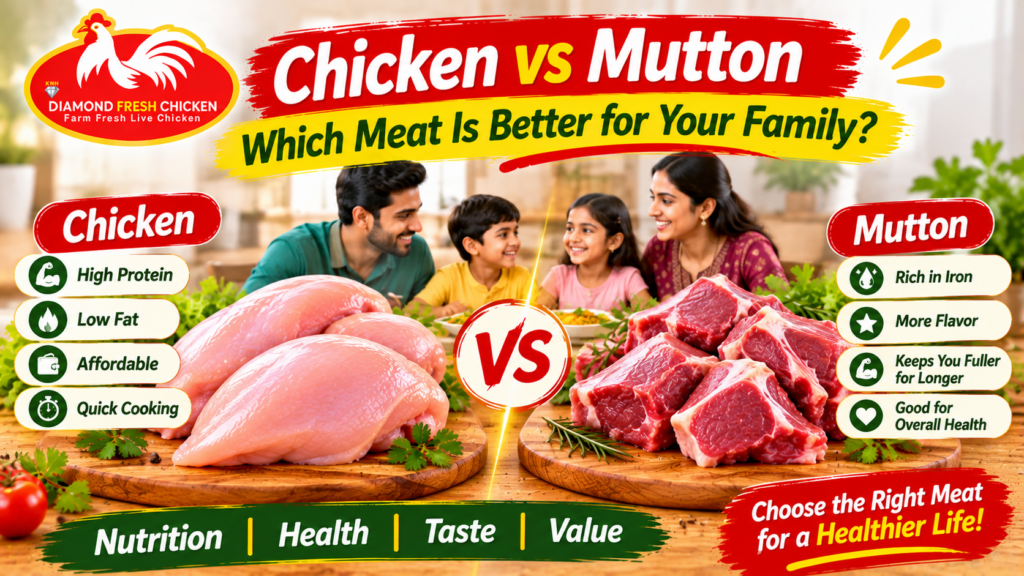
Sunday lunch in many Indian homes means one big decision: chicken or mutton. Mutton is the festive favourite, while chicken is the everyday staple. Both are nutritious, but they differ a lot on fat, minerals, cooking time and price.
For background on chicken in a balanced diet, see our guide on
whether chicken is good for health.
This post settles chicken vs mutton on nutrition, health, cost and cooking, so you can plan your week with confidence.
The Short Version
Skinless chicken breast has the most protein per calorie of the two.
Lean goat mutton is surprisingly low in fat and much richer in iron and zinc.
Fatty mutton cuts and sheep mutton carry far more fat than lean goat.
In Bangalore, mutton costs more than twice as much per kg as chicken curry cut.
Chicken cooks faster and is easier to digest; mutton suits slow, festive cooking.
What Is The Difference Between Chicken And Mutton?
Chicken is white poultry meat, while mutton is red meat from goat or sheep. In most of India, mutton means goat meat, though in Karnataka and parts of the south it often comes from sheep. Red meat has more myoglobin, which gives it a darker colour, stronger flavour and more iron.
The chicken vs mutton difference shows up in four practical ways:
Texture: chicken is soft and cooks quickly. Mutton has more connective tissue and needs slow cooking to turn tender.
Flavour: chicken is mild and takes on spices easily. Mutton has a deeper, gamier taste of its own.
Fat: chicken fat sits mostly in the skin, so it is easy to remove. Mutton fat is spread through the meat and around the cut.
Source animal: goat mutton is leaner, while sheep mutton and lamb tend to be fattier.
Both meats come in several cuts. For chicken, our guide to the
types of chicken cuts explains which piece suits which dish, from curry cut to boneless breast.
How Do Chicken And Mutton Compare On Nutrition?
Per 100 g cooked, skinless chicken breast gives about 31 g of protein and 165 calories, while lean roasted goat gives about 27 g of protein and 143 calories. Goat carries far more iron and zinc, while chicken breast has more protein per serving.
Here is the side-by-side picture, using USDA values for roasted meat:
| Per 100 g cooked |
Chicken breast (skinless) |
Lean goat mutton |
| Calories |
165 kcal |
143 kcal |
| Protein |
31 g |
27 g |
| Fat |
3.6 g |
3.0 g |
| Iron |
1.0 mg |
3.7 mg |
| Zinc |
about 1 mg |
5.3 mg |
| Vitamin B12 |
Present |
Higher |
When people search for mutton protein per 100g, the answer is about 20 g raw and 27 g cooked for lean goat. That puts it close to chicken, not far behind it.
The catch is that most market mutton is not lab-lean goat. Curry cut mutton often includes fat, and sheep mutton or lamb can run to 250 calories or more per 100 g cooked. So the chicken vs mutton result depends heavily on which cut and animal you buy.
Which Is Healthier, Chicken Or Mutton?
For most people, skinless chicken is the healthier everyday choice because it is lean, low in saturated fat and easy to digest. Lean goat mutton is also healthy in moderate amounts and is the better pick when you need more iron or zinc.
So which is healthier, chicken or mutton? It depends on your needs:
Weight loss: chicken breast. More protein per calorie and almost no hidden fat.
Heart health: skinless chicken most days. Health bodies advise limiting red meat, so keep mutton to once or twice a week.
Low iron or anaemia: lean mutton helps, because red meat iron is well absorbed.
Growing kids and teenagers: a mix of both gives protein plus iron and zinc for growth.
Gout or high uric acid: both are moderate in purines, but red meat and organ meats are usually limited more strictly.
Older adults: chicken is softer and easier to chew and digest.
Fat is the big variable in both meats. With chicken, removing the skin cuts most of it, and our post on
skinless chicken benefits shows the difference. With mutton, choose lean cuts and trim visible fat. That is the honest answer to the chicken vs mutton health question.
Which Costs Less, Chicken Or Mutton?
Chicken costs much less. In Bangalore, mutton was listed at around ₹800 per kg and boneless mutton at ₹1,200 per kg, against about ₹342 per kg for skinless chicken curry cut at Diamond Fresh Chicken.
Here is how the main options compared in November 2026. Mutton prices come from the
daily mutton price listing for Bangalore, and chicken prices from the Diamond Fresh Chicken store on 12 November 2026.
| Meat |
Approx. price per kg |
| Chicken curry cut, with skin |
₹323 |
| Chicken curry cut, skinless |
₹342 |
| Chicken breast, boneless |
₹791 |
| Mutton, bone-in |
₹800 |
| Mutton, boneless |
₹1,200 |
The mutton price in Bangalore usually rises further around festivals, weekends and the end of fasting months, while chicken prices move with feed costs and weather.
What this means for your budget:
Family curries: chicken curry cut costs well under half the price of bone-in mutton.
Boneless: even boneless chicken breast is cheaper than bone-in mutton.
Protein per rupee: chicken wins clearly in any chicken vs mutton price comparison.
Which Is Easier To Cook And Digest?
Chicken is easier on both counts. A chicken curry cooks in about 30 minutes, while mutton usually needs 45 minutes in a pressure cooker or up to two hours on a slow flame. Chicken’s lighter fat and softer fibres also make it easier on the stomach.
How the two compare in a home kitchen:
Cooking time: chicken needs no pressure cooker; mutton almost always does.
Marinating: chicken absorbs flavour in 30 minutes; mutton benefits from several hours or overnight.
Leftovers: both reheat well, though mutton gravy often tastes better the next day.
Digestion: many people find heavy mutton meals tiring, especially at dinner.
For weekday meals, the chicken vs mutton choice usually comes down to time. Mutton earns its place on slow weekends and festive days.
How Do You Pick Good Quality Chicken And Mutton?
Look for firm, moist meat with a fresh smell and natural colour: pale pink for chicken, and deep red with creamy white fat for mutton. Avoid any meat that is sticky, grey, or smells sour, whichever animal it comes from.
Quick checks before you cook:
Chicken colour: light pink flesh with no grey or green patches. Yellow skin is normal for some birds.
Mutton colour: bright to deep red meat. Dark brown edges usually mean the meat has been sitting out.
Fat: chicken fat should be pale yellow; mutton fat should be white or cream, not yellow and waxy.
Smell: both should smell mildly meaty. A sour or ammonia smell means the meat has spoiled.
Texture: press with a finger. Fresh meat springs back instead of staying dented.
Buying from a supplier that cuts, cleans and chills meat on the day of delivery takes most of this guesswork away, and keeps both meats safer in hot Bangalore weather.
How Often Should You Eat Chicken Or Mutton?
A sensible pattern for most families is chicken three to four times a week and mutton once a week, with fish, eggs, dals and vegetables on the other days. This keeps protein high, red meat moderate and meals varied.
A simple weekly plan:
Weekdays: skinless chicken curry, grilled breast or boneless stir fries.
Midweek vegetarian day: dal, paneer or eggs for variety.
Weekend lunch: a slow-cooked mutton dish with lean cuts.
Festivals and guests: mutton biryani or curry, with a chicken dish alongside for lighter eaters.
Portions: aim for about 100 to 150 g of cooked meat per adult per meal.
When you are cooking for a crowd, our guide on
how much chicken to buy per person helps you plan quantities so nothing goes to waste.
Frequently Asked Questions
Which has more protein, chicken or mutton?
Skinless chicken breast has slightly more, about 31 g per 100 g cooked against about 27 g for lean goat mutton.
Is mutton bad for health?
No, lean goat mutton is nutritious and rich in iron and zinc. Health experts simply advise eating red meat in moderation, about once or twice a week.
Is chicken or mutton better for weight loss?
Skinless chicken breast is better for weight loss, as it gives more protein for fewer calories and less hidden fat.
Why is mutton more expensive than chicken?
Goats and sheep take far longer to raise than broiler chickens and yield less meat per animal, so mutton costs more per kg.
Is mutton better for anaemia than chicken?
Lean mutton has about three times the iron of chicken breast, so it helps more. Follow your doctor’s advice if you have been diagnosed with anaemia.
Which is better for kids, chicken or mutton?
Both are good. A chicken vs mutton mix through the week gives kids lean protein plus the iron and zinc they need for growth.
Ready To Plan This Week’s Meals?
Keep mutton for slow weekends and festivals, and let fresh chicken carry your everyday meals. Order skinless curry cut or boneless breast from
Diamond Fresh Chicken and settle the chicken vs mutton question meal by meal.