Chicken liver is the cheapest nutrient-dense food at most Indian meat counters, yet many families skip it. A small 100 g portion carries more iron, vitamin B12 and folate than a full plate of breast meat. For the bigger picture on chicken and your diet, read our guide on whether chicken is good for health.
This post covers the real chicken liver benefits, the numbers behind them, a safe weekly portion, and a simple way to cook liver that even fussy eaters finish.
Table of Contents
ToggleThe Essentials
- 100 g of raw chicken liver has about 9 mg of iron and 17 g of protein.
- It supplies several days’ worth of vitamin B12 in one serving.
- Liver is very high in vitamin A, so once a week is enough.
- Pregnant women should avoid liver because of its vitamin A content.
- At Diamond Fresh Chicken, a 350 g pack was listed at ₹185.
What Are The Main Chicken Liver Benefits?
The main chicken liver benefits are a large dose of iron for healthy blood, vitamin B12 for nerves and energy, folate for cell repair, vitamin A for eyes and immunity, and good quality protein. All of this comes in a portion that costs less than most boneless cuts.
Here is what each nutrient does for you:
- Iron: helps make haemoglobin, which carries oxygen in your blood. Low iron is a common cause of tiredness, especially in women.
- Vitamin B12: keeps nerves healthy and helps your body turn food into energy. Vegetarian-leaning diets often fall short on it.
- Folate: supports new cell growth and works alongside B12 in forming red blood cells.
- Vitamin A: protects night vision, skin and the lining of your gut and lungs.
- Selenium and zinc: support immunity and thyroid function.
- Protein: around 17 g per 100 g raw, with fewer calories than chicken thigh.
The iron in liver is haem iron, the form your body absorbs most easily. That makes liver a practical option if your doctor has said your iron levels are on the low side.
What Does Chicken Liver Nutrition Look Like Per 100 G?
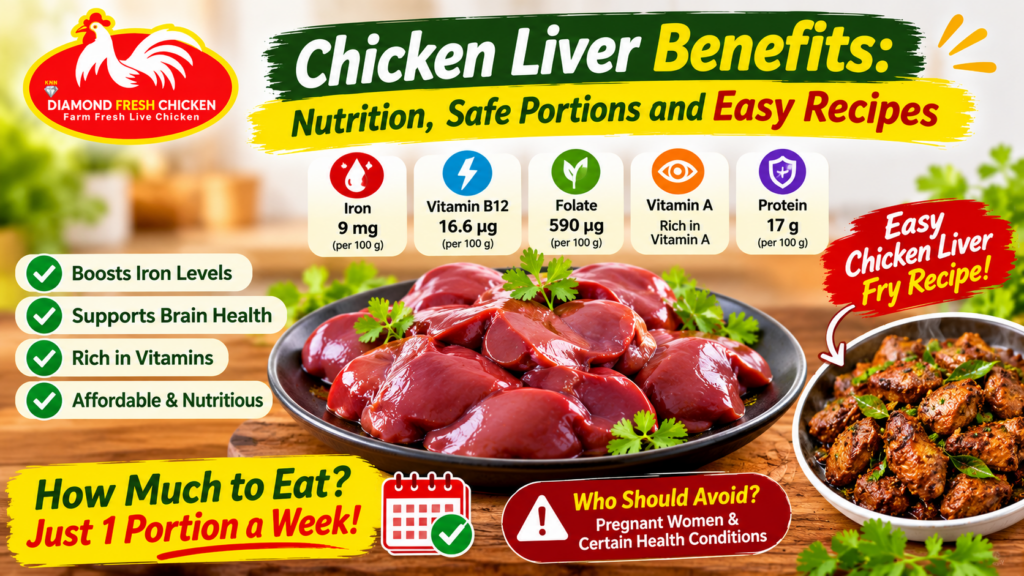
Chicken liver nutrition per 100 g raw works out to roughly 119 calories, 17 g of protein, 5 g of fat, 9 mg of iron, 16.6 µg of vitamin B12 and about 590 µg of folate. Few everyday foods pack this much into such a small portion.
Nutrient (per 100 g raw) | Approx. amount | Why it matters |
Calories | 119 kcal | Light for the protein it carries |
Protein | 17 g | Muscle repair and fullness |
Fat | 5 g | Lower than skin-on curry cut |
Iron | 9 mg | Healthy blood and energy |
Vitamin B12 | 16.6 µg | Nerves, energy and red blood cells |
Folate | 590 µg | Cell growth and repair |
Selenium | 55 µg | Immunity and thyroid support |
Cholesterol | 345 mg | A reason to keep portions moderate |
Compared with breast meat, liver has a little less protein but far more vitamins and minerals. If you want to see how liver fits alongside breast, thigh and curry cut on price and use, our guide to the different types of chicken cuts lays them out side by side.
These figures are based on USDA reference data for raw liver. Cooking removes water, so a cooked 100 g portion shows slightly higher numbers per gram.
How Much Chicken Liver Can You Eat Safely?
For most healthy adults, one portion of about 75 to 100 g once a week is enough to enjoy the chicken liver benefits without overloading on vitamin A. Eating liver every day is not a good idea, because vitamin A builds up in the body over time.
So how much chicken liver can you eat in practice? Use these guidelines:
- Adults: one 75 to 100 g portion per week.
- Children over two: a few small pieces mixed into a dish, not a full adult portion.
- If you take a multivitamin: check the label for vitamin A and skip liver that week if it is high.
The UK’s NHS advises that eating liver or liver pâté more than once a week may give you too much vitamin A, and that people who eat liver weekly should not take vitamin A supplements. That guidance matches the once-a-week rule above.
A single 350 g pack therefore covers three to four weekly servings for one person, or one family meal for four.
Who Should Avoid Or Limit Chicken Liver?
Pregnant women and anyone planning a pregnancy should avoid chicken liver, because very high vitamin A intake can harm a developing baby. People with gout, high uric acid or high cholesterol should check with their doctor before eating it regularly.
The chicken liver benefits are real, but they do not apply to everyone in the same way:
- Pregnancy: avoid liver and liver pâté completely, and do not take vitamin A supplements unless your doctor advises it.
- Gout or high uric acid: organ meats are rich in purines, which can trigger flare-ups.
- High cholesterol: liver carries more dietary cholesterol than muscle meat. Your doctor can tell you whether a small weekly portion fits your plan.
- Older adults: too much vitamin A over many years is linked to weaker bones, so stick to the weekly limit.
- Babies under one: talk to your paediatrician before adding liver to solids.
If you fall into none of these groups, a weekly portion is a sensible, affordable addition to your meals.
How Do You Buy And Store Fresh Chicken Liver?
Buy liver that is deep reddish brown, glossy and firm, with a clean smell and no green patches. Use it within a day of delivery or freeze it the same day, because liver spoils faster than muscle meat.
On chicken liver price, the Diamond Fresh Chicken store listed a 350 g pack at ₹185 on 12 November 2026, which works out to about ₹529 per kg. Stock changes daily, so check the app before you plan a menu.
That price makes liver one of the cheapest ways to get chicken liver benefits like iron and B12 into your week.
When your pack arrives, look for these signs of freshness:
- Colour: even reddish brown. Grey or very pale liver is past its best.
- Texture: smooth and slightly firm, not slimy or sticky.
- Smell: mild and clean. Any sour or sharp odour means it should go.
- Green spots: these are bile stains. Trim them off, or the dish will taste bitter.
Keep raw liver on the lowest shelf of the fridge in a sealed box, and cook it within 24 hours. For season-by-season fridge and freezer tips, see our guide on how to store chicken safely at home. Frozen liver keeps well for up to three months.
How Do You Cook Chicken Liver Without A Bitter Taste?
Clean the liver well, trim any green bile spots, and cook it quickly on high heat until no pink remains in the centre. Overcooking makes liver grainy and strong, while undercooking is unsafe, so aim for about five to seven minutes in the pan.
This simple liver fry is how most South Indian homes get the chicken liver benefits onto the table:
- Clean: rinse the liver, trim connective tissue and cut away any green spots.
- Soak (optional): soak in buttermilk or salted water for 20 minutes to soften the flavour.
- Marinate: add turmeric, chilli powder, salt and a little ginger garlic paste. Rest for 15 minutes.
- Temper: heat oil, add curry leaves, sliced onion and green chilli, and fry until golden.
- Cook: add the liver on high heat, toss for five to seven minutes until no pink remains.
- Finish: add crushed pepper, a squeeze of lemon and fresh coriander.
The lemon is not just for taste. Vitamin C from lemon helps your body absorb even more of the iron in the meal. Serve the fry with rice and rasam or rolled into chapati.
Frequently Asked Questions
Is chicken liver good for health?
Yes, in moderate amounts. It is rich in iron, vitamin B12, folate and protein, but its high vitamin A content means one portion a week is enough for most adults.
Can I eat chicken liver every day?
No, because daily liver can push your vitamin A intake far above safe levels. Keep it to about one 75 to 100 g portion a week instead.
Is chicken liver good for anaemia?
It can help, because liver is rich in easily absorbed haem iron and vitamin B12. If you have been diagnosed with anaemia, follow your doctor’s treatment plan and ask before relying on food alone.
Can pregnant women eat chicken liver?
No. Health authorities advise pregnant women to avoid liver and liver products, because very high vitamin A intake may harm the developing baby.
How long does raw chicken liver last in the fridge?
Raw chicken liver is best cooked within 24 hours at 4°C or below. Freeze it on the day of delivery if you cannot cook it in time.
Why does my chicken liver taste bitter?
Green bile stains are the usual cause. Trim them off before cooking, and avoid overcooking, which keeps the chicken liver benefits intact and the texture soft.
Ready To Add Liver To Your Weekly Menu?
One small portion a week is all it takes. Order fresh, cleaned chicken liver from Diamond Fresh Chicken on the website or app, cook it the same day, and enjoy the chicken liver benefits with a quick pepper fry.