
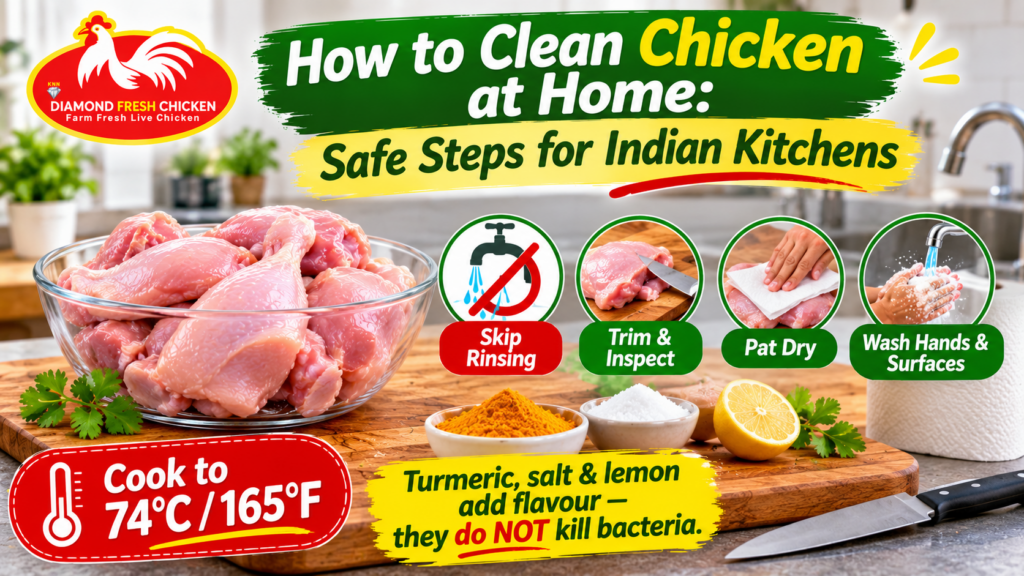
Most Indian cooks were taught to scrub chicken under the tap with salt and turmeric before it goes in the pot. The habit feels hygienic, but food safety research says the splash from that rinse can do more harm than good.
Once cleaned, raw chicken also needs the right fridge routine, which our guide on how to store chicken safely at home covers season by season.
This post explains how to clean chicken properly: what to trim, when water helps, what turmeric really does, and how to keep your sink and counters free of germs.
Table of Contents
ToggleThe Short Version
- Cleaning chicken means trimming fat, feathers, blood clots and bone bits, not scrubbing it under running water.
- Rinsing raw chicken spreads bacteria around your sink and counters.
- Salt, lemon, vinegar and turmeric improve smell and taste but do not make raw chicken safe.
- Cooking chicken to 74°C (165°F) is what kills harmful bacteria.
- Wash your hands, board and knife with hot soapy water after handling raw meat.
Should You Wash Chicken Before Cooking?
No, washing raw chicken under running water is not recommended. Water droplets carry bacteria such as Salmonella and Campylobacter onto the sink, counter and nearby food, and rinsing does not remove them from the meat. Proper cooking is what makes chicken safe to eat.
So should you wash chicken before cooking if your family has always done it? The research is clear on the risk.
In a 2019 observational study, the USDA found that most people who washed raw poultry left bacteria in their sink, and about a quarter of them spread it to a salad they made afterwards. Some sinks still carried bacteria even after people tried to clean them.
That does not mean you skip cleaning altogether. Knowing how to clean chicken the safe way simply means doing the trimming and tidying with a knife and paper towels instead of a running tap.
What Does Cleaning Chicken Actually Mean?
Cleaning chicken means removing the parts you do not want to eat: extra fat, loose skin, stray feathers, blood clots, bone splinters and any bits of organ left inside. It is a knife and inspection job, not a washing job.
Here is what to look for on each piece:
- Extra fat: yellow lumps near the thigh and tail end. Trim them for a lighter curry.
- Pin feathers: tiny quills left in the skin. Pull them out with tweezers or the tip of a knife.
- Blood clots: dark red spots near the bone. Wipe them off with a damp paper towel.
- Bone splinters: sharp shards from cutting through bone. Run your fingers over curry cut pieces to find them.
- Leftover organs: bits of lung or kidney tucked inside the ribs of a whole bird. Scrape them out with a spoon.
What you clean depends on the cut. Boneless breast needs almost nothing, while a whole bird or bone-in curry cut needs a closer look. Our guide to the types of chicken cuts and their uses explains how each pack is cut, which tells you where splinters and fat are likely to sit.
Cut | What usually needs cleaning |
Whole chicken | Cavity organs, neck fat, pin feathers |
Curry cut (bone-in) | Bone splinters, blood clots, extra fat |
Biryani cut | Fat near the thigh, loose skin |
Boneless breast | White tendon strip on the underside |
Drumsticks and legs | Pin feathers on the skin, knuckle cartilage |
Liver | Green bile spots and connective tissue |
How To Clean Chicken Step By Step At Home?
The safest way to prepare raw chicken is to set up your work area first, trim each piece on one board, pat it dry with paper towels, and clean everything it touched before you move on. The whole job takes about ten minutes for a one kilo pack.
Follow these seven steps for how to clean chicken without spreading germs:
- Prepare salads and cut vegetables first. Anything eaten raw should be done and covered before the chicken comes out.
- Clear the area around your sink. Move dish racks, cloths and clean utensils away from the splash zone.
- Use one board and one knife for raw meat. A plastic board is easier to scrub than wood.
- Trim and inspect each piece. Remove fat, feathers, clots and splinters, then place the piece in a clean bowl.
- Pat dry with paper towels. This removes surface moisture and loose bits, and helps masala stick. Bin the towels straight away.
- Marinate or cook right away. Add salt, turmeric and spices directly to the bowl.
- Clean up with hot soapy water. Wash your hands for 20 seconds, then the board, knife, bowl and counter.
If your chicken comes pre-cleaned and packed, you can often skip straight to step five. That is one of the practical benefits of buying from a supplier that trims and portions the meat before delivery.
Can You Clean Chicken With Turmeric, Salt Or Lemon?
Turmeric, salt, lemon and vinegar can freshen the smell and season the meat, but they do not make raw chicken safe. None of them reliably kills the bacteria on raw poultry. Only cooking the meat all the way through does that.
Many families clean chicken with turmeric as a matter of habit, and there is no harm in keeping it as part of your marinade.
Turmeric has a long place in Indian cooking, and chicken itself is a strong everyday protein, as our guide on whether chicken is good for health explains. Just be clear about what each ingredient does to raw meat:
Ingredient | What it actually does | Kills bacteria on raw chicken? |
Turmeric | Adds colour and earthy flavour, masks raw smell | No |
Salt | Seasons, firms the texture, draws out some moisture | No |
Lemon or vinegar | Brightens flavour, cuts strong smells, slightly tenderises | No |
Wheat flour rub | Lifts slime and loose bits before wiping | No |
Cooking to 74°C | Destroys Salmonella and Campylobacter | Yes |
The smart move is to add these straight into your marinade bowl instead of using them in a rinse at the sink. You keep the flavour benefits without the splash risk, and that is exactly how to clean chicken the modern way while still respecting the old habit.
How Do You Remove Chicken Smell?
To remove chicken smell from fresh meat, pat the pieces dry, then rub them with a little lemon juice, salt and turmeric and rest them for ten minutes. Fresh chicken should only smell faintly meaty, so a strong sour smell is a warning sign, not a cleaning problem.
A big part of knowing how to clean chicken is telling a normal smell from a bad one:
- Normal raw smell: mild and slightly metallic. A quick lemon and turmeric rub takes care of it.
- Smell from the packaging: trapped air can smell stale when you first open the pack. It fades within a minute or two.
- Sour, eggy or ammonia smell: the chicken has spoiled. No amount of washing or lemon will fix it, so throw it away.
Other signs of spoiled chicken include a sticky or slimy surface that stays after patting dry, and grey or green patches on the meat. When in doubt, throw it out.
For lingering smells on your hands, rub them with a little lemon juice or coffee grounds after washing with soap. For boards and knives, a paste of baking soda and water works well.
How Do You Keep Your Kitchen Safe While Handling Raw Chicken?
Keep raw chicken away from anything that will not be cooked, use a separate board for meat, and wash your hands and every surface the chicken touched with hot soapy water. Most kitchen food poisoning comes from hands and boards, not from the meat itself.
The same USDA study found that people who did not wash their chicken still spread bacteria at times, usually through hands and utensils that were not cleaned properly. That makes these habits just as important as knowing how to clean chicken:
- Wash hands for 20 seconds with soap after touching raw meat, before you touch the fridge, spice jars or your phone.
- Keep two boards. One for raw meat, one for vegetables, fruit and bread.
- Never reuse the marinade bowl for serving without washing it first.
- Wipe counters with hot soapy water, then a kitchen disinfectant if you have one.
- Wash dish cloths often, or use paper towels for raw meat spills.
Handled this way, chicken stays one of the safest and most useful proteins in your kitchen.
Frequently Asked Questions
Should I wash chicken before cooking?
No, because rinsing raw chicken spreads bacteria around your sink without making the meat safer. Trim it, pat it dry and cook it to 74°C.
Does turmeric kill bacteria on raw chicken?
Not reliably. Turmeric adds colour and masks raw smell, but only thorough cooking kills the harmful bacteria on chicken.
How do I clean a whole chicken?
Remove any leftover organs from the cavity, trim neck fat and pull out pin feathers. Pat the bird dry inside and out with paper towels before seasoning.
Is it safe to clean chicken with vinegar?
Vinegar can reduce smell and add flavour, but it does not make raw chicken safe. Use it in your marinade rather than as a rinse at the sink.
Why does my chicken smell after cleaning?
A mild meaty smell is normal. A sour, eggy or ammonia smell means the chicken has spoiled, and it should be thrown away rather than washed again.
Does pre-cleaned chicken need cleaning at home?
Very little. Learning how to clean chicken matters most for whole birds; pre-cleaned packs usually need only a quick check for splinters and a pat dry before cooking.
Ready To Skip The Messy Prep?
Order fresh chicken from Diamond Fresh Chicken that arrives cut, cleaned and hygienically packed, so your prep is down to a quick check and a pat dry. Now that you know how to clean chicken safely, you can get it from pack to pan in minutes.