You pull the chicken out of the fridge, unwrap it, and pause. Something feels off. If you have ever stood at your kitchen counter wondering how to tell if chicken has gone bad, you are not alone. Most home cooks in India have faced this exact moment, especially during summer when spoilage happens faster. The good news is that your senses are usually enough to catch the warning signs, as long as you know what to check.
In this guide, we will walk you through every reliable way to check if chicken is safe to cook, why fresh, same-day chicken is easier to judge than frozen packs, and what to do if you are ever in doubt.
Whether you are checking for general signs of spoiled chicken before dinner, running a quick raw chicken smell test on something that has sat in the fridge a while, wondering is my chicken bad after a long delivery wait, or trying to catch the early chicken gone bad symptoms before they get worse, the checks below cover all of it.
Why Checking Chicken Freshness Matters
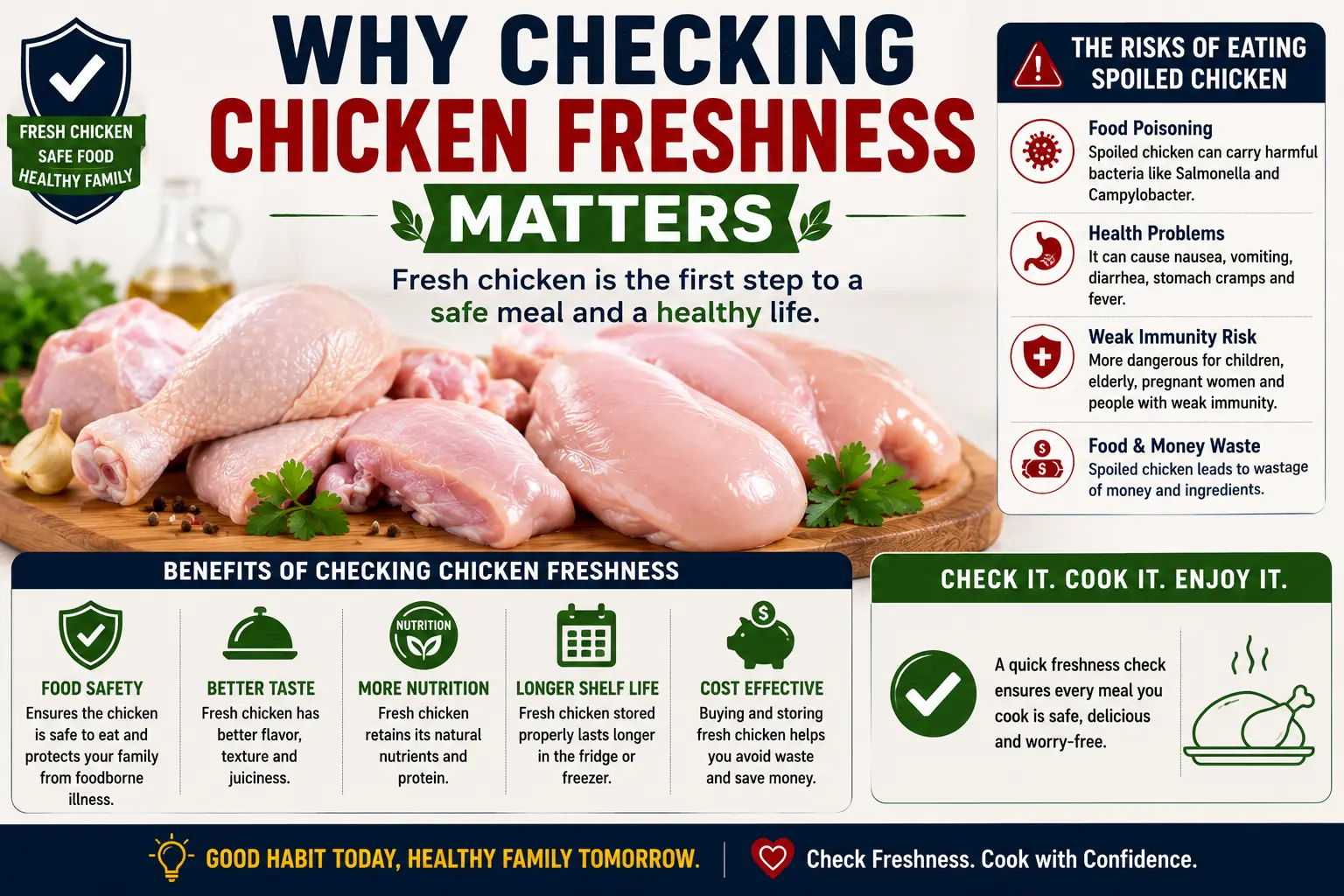
Chicken is one of the most common sources of food poisoning at home, mainly because bacteria like salmonella do not always change how the meat looks. This is exactly why learning signs of spoiled chicken matters so much. A few extra seconds of checking can save you days of stomach trouble.
According to the USDA Food Safety guidelines, raw chicken should not sit in the refrigerator for more than one to two days before cooking. Beyond that window, the risk of spoilage rises quickly, even if the chicken still looks fine on the surface.
The checks below are simple, take less than a minute, and do not need any special equipment. Run through them in order and you can stop asking is my chicken bad every time you open the fridge, because the signs of spoiled chicken will either show up clearly or you can rule them out.
Sign 1: The Smell Test
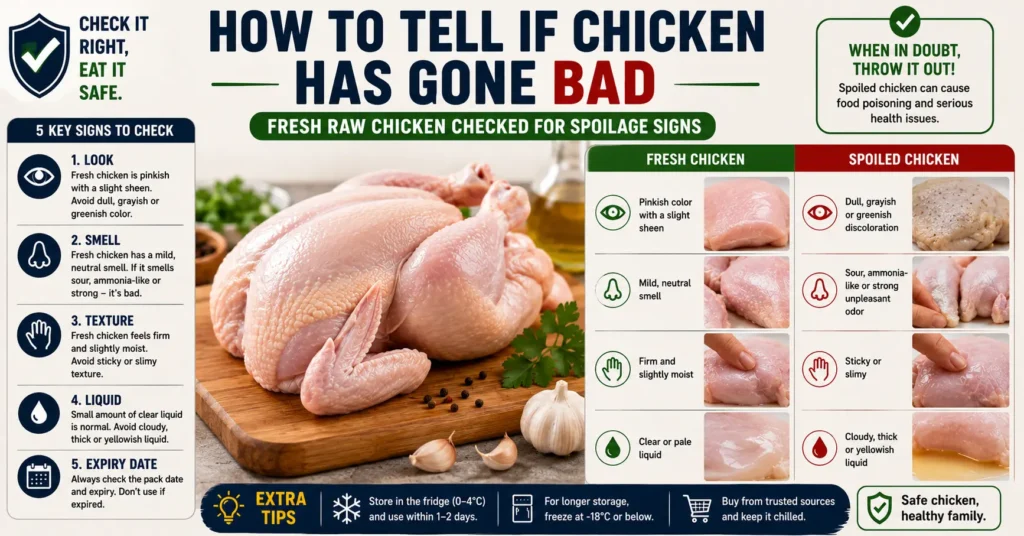
Smell is the fastest way to catch a problem. Fresh raw chicken has almost no smell at all, maybe a faint, clean scent. If you unwrap your chicken and the smell hits you before you even bring it close, that is your answer.
A raw chicken smell test should be simple:
- Unwrap the chicken and let it sit for a minute or two, since packaging can trap a mild smell that fades on its own.
- Bring it close and take a normal sniff, not a deep one.
- Sour, sulfur-like, or rotten egg smells mean the chicken has spoiled.
- Ammonia-like smells are a strong warning sign too, especially in packaged chicken.
One thing to keep in mind: a bad smell always means spoiled chicken, but a normal smell does not always mean the chicken is safe. Bacteria growth does not always produce an obvious odor early on, so smell should be your first check, not your only one. If you are prepping for something specific, like our Donne Biryani recipe, starting with chicken you have properly checked makes the whole dish safer from the first step.
Sign 2: Color Changes to Watch For
Fresh raw chicken is usually a light pink shade with white fat. Some natural variation is normal, parts of the meat can look slightly darker or paler depending on the cut. What you are really watching for is a shift away from pink toward grey, yellow, or green.
| Color | What It Means |
|---|---|
| Light pink with white fat | Fresh and safe to cook |
| Slightly darker or paler pink | Normal variation, still safe |
| Grey or dull pink | Early sign of spoilage, check other signs |
| Green, blue, or yellow patches | Spoiled, do not cook |
Fat that has turned yellow instead of white is another red flag, and it often shows up alongside the grey or green tones. If you notice any of these color shifts, do not rely on cooking to make it safe. Heat kills some bacteria, but it does not undo spoilage or remove toxins some bacteria leave behind.
Sign 3: Texture and Stickiness
Touch tells you almost as much as smell. Fresh raw chicken should feel smooth and slightly moist, similar to how it looks straight out of the packaging. Spoiled chicken feels noticeably different.
Here is what to check with a light touch:
- Slimy or tacky texture on the surface means bacteria have already started multiplying.
- A sticky film that does not rinse off easily under water is a bad sign.
- Chicken that feels unusually soft, mushy, or falls apart too easily has likely gone off.
- Fresh chicken should bounce back slightly when pressed. Spoiled chicken often stays dented.
If the chicken passes the smell and color checks but feels slimy, trust the texture. Among all the signs of spoiled chicken, this is often the clearest one, especially for chicken that has been sitting in the fridge for a couple of days.
Sign 4: Packaging Clues
Before you even open the pack, the packaging itself can tell you something. This applies especially to chicken bought through home delivery or from a supermarket, where you are not watching it get cut fresh.
- A puffed up or bloated package usually means gas has built up inside, a clear sign of bacterial activity.
- Excess liquid or cloudy liquid pooling inside the pack is worth a second look.
- Torn or resealed packaging suggests the chicken may have been exposed to air longer than it should have been.
- Always check that the pack has been kept cold. Chicken left at room temperature, even briefly, spoils much faster.
If you order online, a reliable seller should always keep chicken properly chilled from cutting to delivery. That single detail affects freshness more than almost anything else you can control after the chicken reaches your kitchen, and it is often the real answer to how to tell if chicken has gone bad before you even open the pack.
Sign 5: How Long It Has Been Stored
Time in the fridge matters even if nothing looks or smells wrong yet. This is one of the most common chicken gone bad symptoms people miss, because they judge only by appearance and forget to check how long it has actually been sitting.
A simple rule to follow, based on the most common chicken gone bad symptoms tied to storage time rather than appearance:
- Raw chicken: safe for one to two days in the refrigerator.
- Cooked chicken: safe for three to four days in the refrigerator.
- Frozen raw chicken: safe for up to nine months, though quality drops over time.
- Frozen cooked chicken: best used within two to three months.
If you cannot remember exactly when you bought or cooked it, write the date on the packaging with a marker the moment it enters your fridge. This one habit removes most of the guesswork later.
Sign 6: Signs in Cooked Chicken
Cooked chicken can spoil too, and the signs of spoiled chicken look slightly different once it has been cooked. Since color and texture have already changed through cooking, you need to look for a second round of changes.
- A sour or off smell that was not there right after cooking.
- Visible mold, which can appear white, green, or black depending on the type.
- A dry, hard, or unusually tough texture compared to when it was freshly cooked.
- Any sliminess on the surface, similar to raw chicken.
If cooked chicken has been left out at room temperature for more than two hours, it is safer to discard it, even if none of these signs are visible yet. Bacteria multiply fastest in what food safety regulators call the danger zone, between 5°C and 60°C, a standard also reflected in FSSAI cold storage compliance guidelines for meat and poultry in India.
Sign 7: The Taste Test You Should Skip
Here is one sign we do not recommend testing directly: taste. Some people think tasting a tiny bit will tell them if chicken has spoiled. It will, but only after you have already exposed yourself to whatever bacteria or toxins are present.
If chicken has passed the smell, color, texture, and packaging checks and something still feels off, the safest move is simple. When in doubt, throw it out. A wasted piece of chicken costs far less than a few days of food poisoning.
Fresh vs Frozen: Which Is Easier to Judge?
This is a question we hear often, especially from customers exploring is my chicken bad concerns after switching between frozen packs and same-day fresh chicken.
Fresh, same-day chicken is generally easier to judge because you are checking it closer to the point of cutting. The smell, color, and texture checks above work reliably within the recommended one to two day window.
Frozen chicken adds an extra layer, since freezing pauses bacterial growth but does not reverse any spoilage that may have started before freezing. Once thawed, frozen chicken should be checked using the exact same signs, and it should be cooked within a day or two of thawing, not refrozen and thawed again. If you are still asking is my chicken bad after thawing, run through the smell, color, and texture checks again from the start.
This is one reason many households in Bangalore are shifting toward fresh, hygienically cut chicken delivered the same day, rather than chicken that has spent unknown time in cold storage before reaching the shop.
Market Chicken vs Packaged Chicken: Different Checks Apply
In most Indian cities, chicken reaches your kitchen through one of two routes: cut fresh at a local shop in front of you, or delivered in sealed packaging from a supermarket or online service. Both can be perfectly safe, but how to tell if chicken has gone bad shifts slightly depending on which route you are dealing with.
When you are buying from a shop that cuts the bird in front of you, freshness is easier to judge in the moment. You can ask the vendor directly when the stock came in, check the skin for blemishes or a greenish tint near the wings, and watch for the same signs of spoiled chicken you would look for at home before the meat is even cut. The main risk here is less about spoilage and more about hygiene during handling, so a clean cutting surface and a vendor who stores stock on ice or refrigeration rather than at room temperature matters as much as the meat itself.
Packaged and delivered chicken removes that visual reassurance, so the packaging clues from earlier in this guide carry more weight. A sealed pack with no puffing, no pooled liquid, and a recent cutting date printed or stated at the time of order is your best substitute for watching the cut happen yourself. This is also where choosing a seller with a genuine same-day, cold-chain process makes a real difference, since the gap between cutting and delivery is exactly where quality can quietly slip if it is not managed properly.
Checking Freshness by Cut: Breast, Leg, and Whole Chicken
Not every cut shows spoilage the same way, so how to tell if chicken has gone bad can depend on what you have bought, not just which checks you run.
- Chicken breast: Being leaner, breast meat shows discoloration faster than fattier cuts. Watch for any grey undertone across the surface and check the thicker end of the piece, since moisture tends to pool there first if the meat has started to break down.
- Chicken leg and thigh: These cuts have more fat and skin, so smell becomes a more reliable check than color alone. Pay attention to the skin, since it can turn slightly yellow or develop a tacky feel before the meat underneath shows obvious signs.
- Whole chicken: Check the cavity first, not just the outer skin. A basic raw chicken smell test inside the cavity often catches a sour smell before any external sign does, so open it up and check before you season or marinate.
- Boneless cuts and mince: These spoil faster than cuts on the bone because more surface area is exposed to air. Treat boneless chicken and mince with a shorter safe window, ideally cooked within a day of purchase.
Knowing these small differences means you are not applying a single generic check to every type of cut, which is where a lot of people miss early warning signs.
How to Store Chicken So It Stays Fresh Longer
Checking for spoilage matters, but good storage habits reduce how often you need to check in the first place. If you want a deeper walkthrough on keeping fresh chicken delivered to your door in Bangalore at its best quality, our delivery guide covers handling from doorstep to fridge.
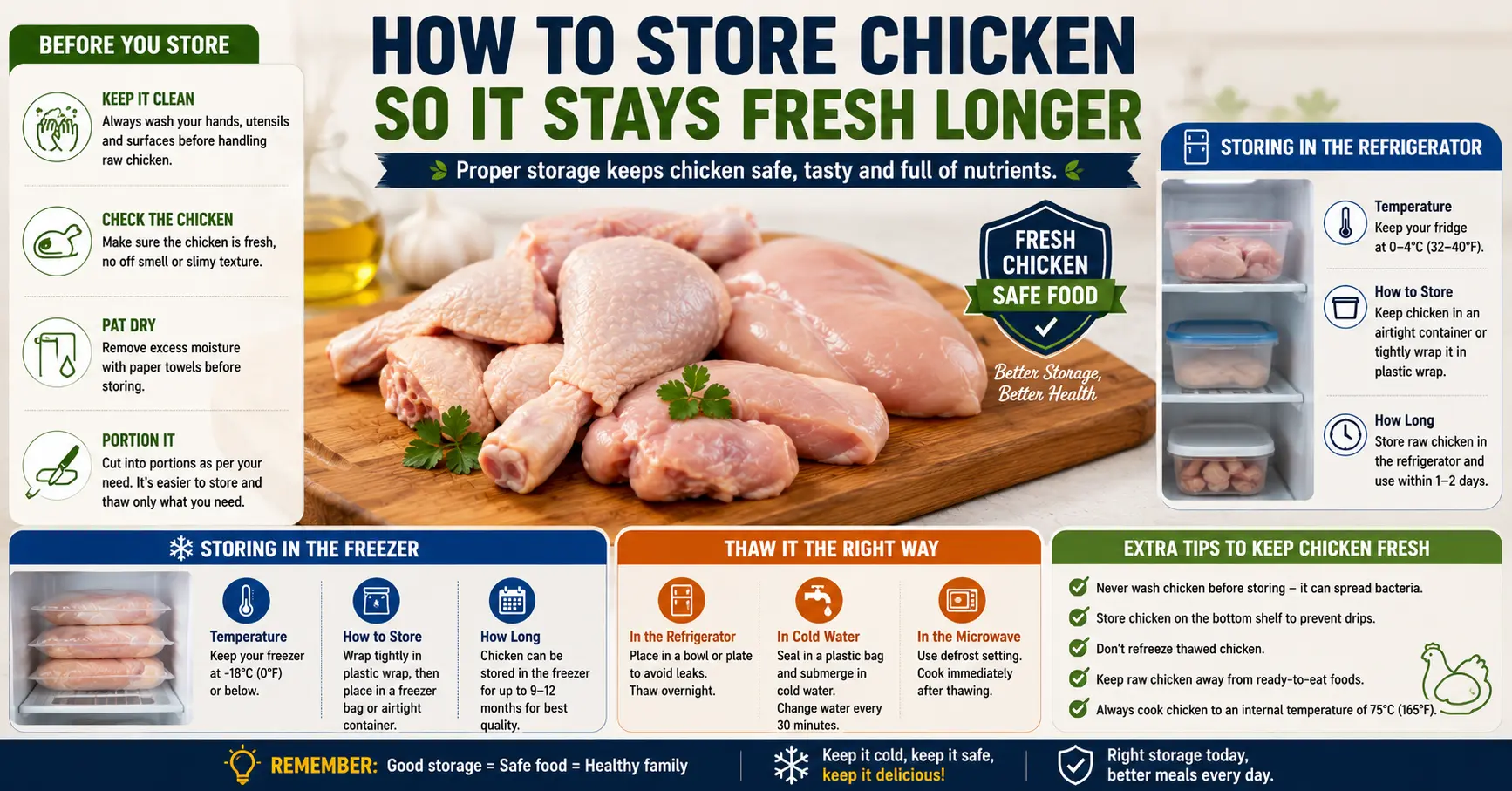
- Keep raw chicken on the bottom shelf of the fridge, so juices cannot drip onto other food.
- Store it in a sealed container or tightly wrapped packaging, never left open.
- Set your fridge to 4°C or below for raw meat storage.
- Cook or freeze chicken within two days of purchase if you are not using it immediately.
- Label the date of purchase or cooking directly on the packaging.
Small habits like these make the difference between chicken that lasts its full safe window and chicken that spoils early because it was stored carelessly.
Frequently Asked Questions
Can you cook away bacteria in chicken that has gone slightly bad?
No. Cooking kills most bacteria, but it does not remove toxins that some bacteria produce, and it does not reverse spoilage. If chicken shows signs of spoilage, cooking it does not make it safe to eat.
Does washing raw chicken remove spoilage or bacteria?
No, and it is not recommended. Washing raw chicken can splash bacteria onto your sink, counters, and utensils, increasing contamination risk rather than reducing it. The USDA advises against washing raw poultry before cooking.
How long can chicken sit out before it goes bad?
Raw or cooked chicken should not sit at room temperature for more than two hours. In hot weather, above 32°C, that window shrinks to about one hour.
Is a slightly grey color always a sign of spoiled chicken?
A dull grey shade can be an early sign of spoiled chicken, but on its own it is not always definite. Always combine the color check with smell and texture before deciding.
What should I do if I am not sure whether my chicken is still good?
If you are still asking is my chicken bad after checking smell, color, and texture, treat any lingering chicken gone bad symptoms as reason enough to skip it. Follow the rule most food safety experts recommend: when in doubt, throw it out. It is a small cost compared to the risk of foodborne illness.
The Simplest Way to Avoid This Guesswork
Learning how to tell if chicken has gone bad is a useful skill, but the easiest way to avoid the guesswork is to start with chicken that is genuinely fresh and properly handled from the beginning. A quick raw chicken smell test at the point of delivery tells you most of what you need to know before the meat ever reaches your fridge. Beyond that, it also helps to check the source, the cutting process, and how quickly it reaches your kitchen after processing.
At Diamond Fresh Chicken, every order is cut fresh and delivered the same day, so you are never left wondering how long it has been sitting around. If freshness checks are something you find yourself doing often, it may be worth rethinking where your chicken comes from in the first place.