Fresh chicken near me is likely the first thing you type into your phone when you are planning a Sunday roast or a quick weekday stir-fry. We have all been there standing in the refrigerated aisle, staring at a dozen different plastic-wrapped trays, wondering which one actually lived a good life and, more importantly, which one is going to taste like cardboard. Finding truly high quality poultry is not just about convenience; it is about flavor, safety, and getting your money’s worth.
Why Finding a Local Chicken Supplier Matters
When you start searching for a local poultry farm, you are looking for more than just a grocery item. You are looking for a shorter supply chain. The “big box” store chicken often travels hundreds of miles before it hits the shelf. By the time it reaches your kitchen, that “fresh” label is doing a lot of heavy lifting. When you find a reliable source nearby, you are usually getting meat that was processed within the last 48 hours. The difference in texture is night and day. Have you ever noticed how some chicken breasts leak a massive amount of water in the pan? That is usually a sign of industrial processing.
Understanding the Labels: Organic vs. Pasture-Raised
One of the most confusing parts of buying organic chicken or standard poultry is the sheer volume of marketing buzzwords. It is enough to make anyone’s head spin.
-
Free-Range: This just means the birds had “access” to the outdoors. It doesn’t mean they actually went outside.
-
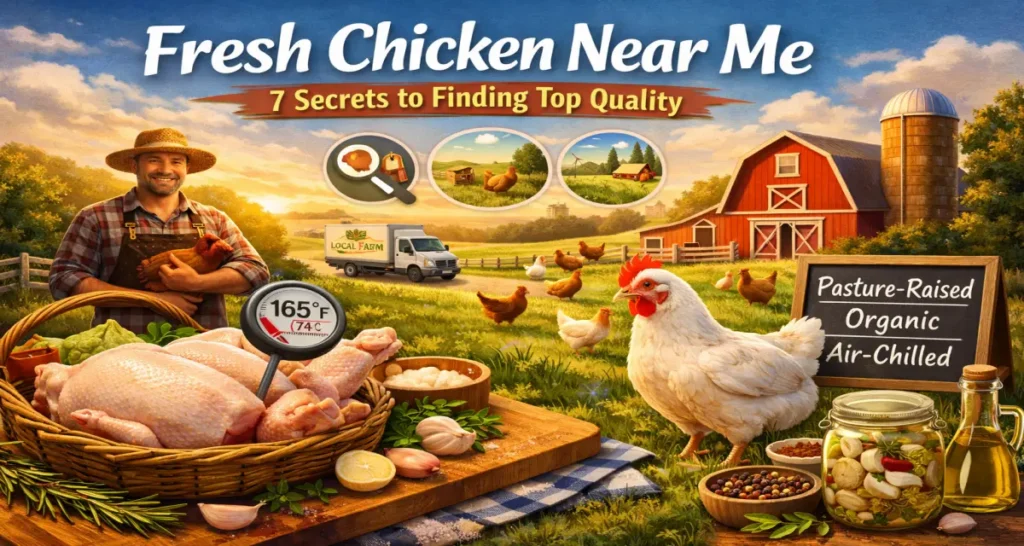
Pasture-Raised: This is the gold standard. These birds spend their days foraging for bugs and grass, which leads to a deeper, more complex flavor and higher Omega-3 levels.
-
Air-Chilled: If you see this, buy it. Most mass-market chicken is cooled in a chlorine water bath (water-chilled), which adds water weight and dilutes the taste.
“The quality of the meat starts with the quality of the life the bird lived. A stressed bird never makes for a tender dinner.” – Chef’s Note on Sustainable Sourcing
Comparison of Poultry Standards
| Feature | Conventional Chicken | Organic Chicken | Pasture-Raised Chicken |
| Diet | Grains and Soy | Organic Grains | Foraged Insects, Grass, and Organic Grain |
| Outdoor Access | None | Limited | Maximum |
| Antibiotics | Common | Prohibited | Prohibited |
| Flavor Profile | Mild / Bland | Balanced | Rich / Robust |
| Price Point | Low | Medium | High |
The Sensory Test: How to Spot Quality in the Shop
When you finally find a place selling premium fresh poultry, you need to use your senses. Don’t just grab the first package you see.
1. The Color Check
High-quality chicken should be pinkish. If it looks grey or excessively white, put it back. If the fat is yellow, that is actually a good sign! It often means the bird had a diet rich in greens or corn.
2. The Texture and Firmness
If you can, give the meat a gentle poke through the plastic. It should be plump and resilient. If it feels mushy or stays indented when you press it, that meat is past its prime.
3. The Liquid in the Tray
We call this “purge.” If there is a pool of pink liquid in the bottom of the tray, it means the chicken has been sitting there far too long or was frozen and thawed. You want a dry tray for the best sear.
Why You Should Search for a Local Poultry Farm
Going directly to a local poultry farm is the ultimate “hack” for foodies. Most people stick to the supermarket because it is easy, but the farmers market or a local butcher offers something a grocery store can’t: transparency. You can actually ask the person behind the counter when the bird was processed.
I remember the first time I bought a bird from a farm just twenty miles away. The skin was thicker, the meat didn’t shrink in the oven, and the stock I made afterward was gold instead of pale yellow. It changed how I cook entirely. It makes you realize that we have become far too used to mediocre ingredients.
Buying in Bulk: The Economic Benefits of a Whole Bird
If you are looking for fresh chicken delivery or local pickups, consider buying the whole bird. It is significantly cheaper per pound than buying pre-cut breasts. Plus, you get the bones for soup. In a world where food prices are skyrocketing, learning to break down a chicken is a skill that pays for itself within a month.
Cooking Techniques for Superior Flavor
Once you have sourced your premium fresh poultry, how you treat it in the kitchen matters just as much as where you bought it. Most home cooks overcook chicken because they are terrified of foodborne illness. We have all been there trying to cut into a breast, only to have it crumble into dry, flavorless dust.
If you are serious about cooking chicken properly, you need a meat thermometer. Forget the “poke test” or waiting until the juices run clear. Those are old-school myths. You want your chicken to reach exactly 74 degrees Celsius (165 degrees Fahrenheit) in the thickest part of the breast. When you pull it off the heat at that precise moment and let it rest for five minutes, the juices redistribute, and the result is anything but dry.
The Importance of the Marinade and the Brine
Have you ever wondered why restaurant chicken always tastes better? It is because they take the time to build flavor before the heat even hits the meat. A simple brine salt, water, a little sugar, and some aromatics like garlic or thyme can transform a standard bird into something truly special.
For those of you who want the convenience of fresh chicken delivery services in Bangalore, I recommend asking them for skin-on options whenever possible. The skin acts as a protective barrier during the cooking process and keeps the meat underneath incredibly moist. If you are roasting, pat the skin bone-dry before it goes in the oven. That is the secret to that crispy, golden-brown finish that everyone fights over.
Why Price Does Not Always Equal Quality
It is easy to get caught up in the price tag. Sometimes we see a premium price and assume the product must be better. But that isn’t always true. In the world of poultry, you are often paying for the brand name or the “premium” marketing package.
When you start looking for fresh chicken near me, don’t just go for the most expensive option. Go for the most transparent option. Can they tell you how the birds were raised? Can they show you the farm? If a vendor is proud of their product, they will be happy to talk your ear off about their processes. If they are evasive, move on to the next one.
Sustainability and the Future of Poultry
We are living in a time where people are more conscious of their footprint than ever before. Choosing to support local farms is a small, everyday way to contribute to a healthier ecosystem. Industrial farming relies on long-distance shipping and massive refrigeration plants, which consume enormous amounts of energy. By sourcing your meat closer to home, you are cutting out those carbon emissions and supporting your local economy at the same time.
It is about building a connection between your plate and the land. That is the true difference between simply eating and actually dining.
Frequently Asked Questions
How long can I safely store fresh chicken in the refrigerator?
Ideally, you should consume fresh poultry within 24 to 48 hours. If you plan to keep it longer, freeze it immediately in airtight packaging to prevent freezer burn and preserve quality.
What is the difference between air-chilled and water-chilled chicken?
Air-chilled chicken is cooled with cold air, which helps retain the meat’s natural juices and flavor. Water-chilled chicken absorbs water during the cooling bath, which dilutes the flavor and can lead to rubbery skin.
Is yellow fat on chicken a sign of poor quality?
Actually, no. Yellow fat is often a sign that the bird had a diet rich in corn or pasture-based grasses. It usually indicates a more flavorful, high-quality bird compared to those with pale white fat.
Why does my chicken shrink so much when I cook it?
Shrinkage is usually caused by high water content, common in industrially processed poultry. If you buy high-quality, pasture-raised, or properly processed chicken, you will notice significantly less shrinkage in the pan.
Can I refreeze chicken that I have already thawed?
It is not recommended unless you have cooked the chicken after it was thawed. If you thaw it in the refrigerator and change your mind, you can cook it completely and then freeze the cooked dish.
Closing Thoughts
Finding the perfect bird is a journey, not a destination. Whether you are a home chef experimenting with new recipes or just trying to put a healthy meal on the table for your family, the effort you put into sourcing your ingredients will pay off in every single bite. Start by identifying a few reliable sources, build a relationship with your local butcher or farmer, and don’t be afraid to ask questions. Your palate and your health will thank you for it.
For maintaining high standards of hygiene and food safety, always choose suppliers that follow guidelines set by the Food Safety and Standards Authority of India.